If your child chips or breaks a tooth, rinse their mouth with warm water, save any tooth pieces in milk, use a cold compress for swelling and call your pediatric dentist. Severe pain, heavy bleeding or a large break needs care right away.
Chipped teeth are one of the most common dental injuries in kids. A trip on the stairs, a collision at practice or a bite into something hard can crack enamel in a second. Most chips are very fixable, but knowing what to do in the first hour helps protect the tooth. Here is how our pediatric dentists in Spanish Fort guide parents through it.
What Should You Do Right After Your Child Chips a Tooth?
Take a breath and check your child first. If there was a hard blow to the head, loss of consciousness, vomiting or confusion, go to the emergency room. Teeth can be treated once your child is safe.
Next, take care of the mouth with these steps:
- Rinse gently. Have your child swish with warm water to clear blood and debris so you can see the tooth.
- Control bleeding. Press clean gauze or a damp cloth on the area. Call us if bleeding will not stop after 10 minutes of gentle pressure.
- Find the pieces. Save any tooth fragments in a small container of milk and bring them with you.
- Reduce swelling. Hold a cold compress on the cheek or lip.
- Ease pain. Give children’s acetaminophen or ibuprofen as directed on the label. Do not put aspirin on the gum or tooth, since it can burn the tissue.
Then call or text us at (251) 626-9924. Our team will ask a few quick questions and tell you what to do before you arrive. If it is after hours, our doctors are on-call for pediatric dental emergencies and will help you decide the next step.
Is a Chipped Tooth a Dental Emergency?
It depends on the size of the break and how your child feels. A small chip with no pain can usually be seen the same day, while some injuries need attention immediately. Use the table below, and when in doubt, call.
| What you see | How urgent | What to do |
|---|---|---|
| Small chip, no pain or sensitivity | Call today | Save any piece, avoid hard foods, schedule a same-day visit |
| Larger break or sharp, jagged edge | Call now | Save the piece, avoid chewing on that side and come in promptly |
| Pink or red spot in the broken tooth, or severe pain | Call now | This can mean the inner tooth is exposed and needs prompt care |
| Tooth loose, pushed out of place or cracked after a fall | Call now | Do not try to force it back; keep your child on soft foods |
| Heavy bleeding, facial swelling or facial trauma | Call now or go to the ER | Get emergency help, then call us |
Our kids emergency dental care page has a full list of signs that mean you should reach out right away. If a tooth was knocked completely out, follow our separate steps for what to do if your child knocks out a tooth, because timing matters even more.
Does It Matter if It Was a Baby Tooth or a Permanent Tooth?
Both deserve a visit. Baby teeth help with chewing, speaking clearly and holding space for permanent teeth to come in straight. An injured baby tooth can still become sensitive or infected, and in some cases trauma can affect the permanent tooth developing underneath, so our doctors will want to check it.
Permanent teeth are meant to last a lifetime, which makes protecting the remaining tooth structure a priority. A break that reaches deeper layers needs prompt care to protect the tooth. In both cases, bring any fragments you found, since they can help us understand the injury.
What If Your Child Also Hurt Their Lip, Tongue or Gums?
Falls that chip a tooth often cut the lip, tongue or inside of the cheek too. These areas have a rich blood supply, so even a small cut can bleed a lot and look frightening. Rinse gently, then hold clean gauze or a cold, damp cloth against the spot with steady pressure.
Most small cuts settle with pressure and a cold compress. Call us if bleeding will not stop after 10 minutes of gentle pressure, if a cut looks deep or gaping, or if your child has trouble eating or drinking afterward. Soft tissue injuries to the lips, tongue or cheeks may need an evaluation, and our doctors can check them at the same visit as the tooth.
What Will the Dentist Do for a Chipped Tooth?
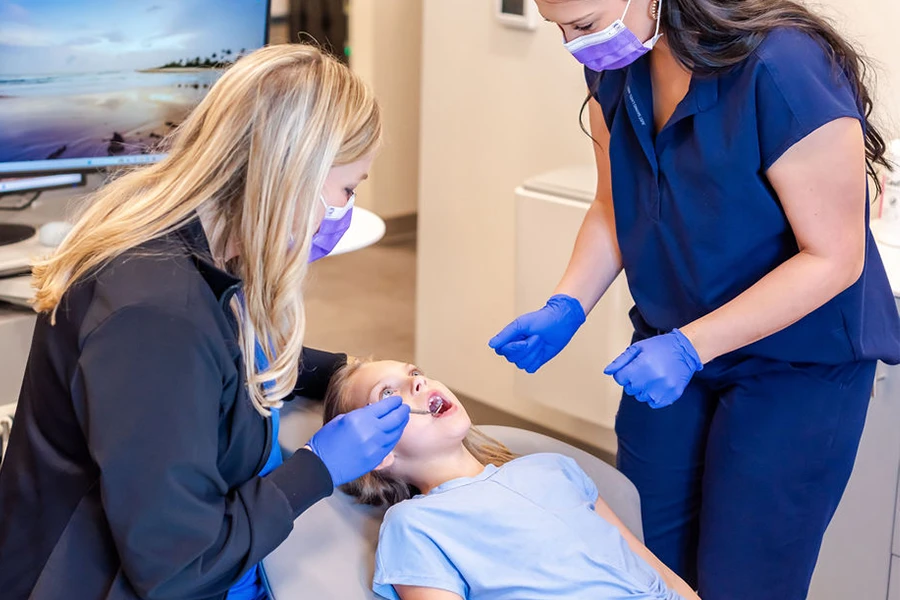
When you arrive, we will greet your child warmly and bring them back as soon as possible. Our doctors look at the area carefully and take low-radiation digital X-rays if needed to check the root and surrounding bone. We explain each step to your child in words they understand, and you will have time to ask questions before anything begins.
Treatment depends on what we find. A small chip may only need smoothing and a repair, while a larger break is often restored with a tooth-colored filling that blends with the natural tooth. Our post on tooth-colored fillings for kids explains how those work. A tooth that was knocked loose may need a stabilizing splint while it heals.
If a baby tooth is too badly broken to save, our doctors may recommend a gentle tooth extraction. For children who feel anxious, nitrous oxide (laughing gas) can help them relax during treatment.
What Does Recovery Look Like at Home?
Before you leave, we give you written aftercare guidance and schedule any follow-up visits needed to monitor healing. In the first days, softer foods and avoiding biting directly on the injured tooth help it settle. Keep brushing gently, including around the injured area.
Watch the tooth over the following weeks. Call us if you notice swelling, a pimple-like bump on the gum, pain that returns, or the tooth turning gray or darker. Those changes can mean the inside of the tooth was affected and should be checked, even if the chip itself was repaired.
How Can You Help Prevent Chipped Teeth?
Not every fall can be avoided, but a few habits lower the risk. Encourage a mouthguard for contact sports and activities where falls are common, such as skating or biking. Discourage chewing ice, hard candy, pens or other hard objects, and remind kids not to use their teeth to open packages.
At home, keep an eye on toddlers who are learning to walk and climb, since early tumbles often involve the front teeth. Regular checkups give our doctors a chance to spot weak or decayed areas that may be more likely to break, and to talk with you about protecting your child’s smile during sports seasons.
Frequently Asked Questions
Can a chipped baby tooth be left alone?
Sometimes a tiny chip only needs monitoring, but it should still be checked. Our doctors will look for cracks, sensitivity or injury to the root that you cannot see at home.
Can you reattach the broken piece of tooth?
Bring any fragments in milk. Depending on the break, a fragment can sometimes help with the repair, and it also helps us understand the injury. Our doctors will explain the options once they see the tooth.
Will a chipped tooth heal by itself?
Tooth enamel does not grow back, so a chip will not fill in on its own. Small chips can be smoothed or repaired, and larger breaks are often restored with a tooth-colored filling.
What if the tooth turns gray after an injury?
A tooth that darkens after trauma should be checked, because the color change can signal a problem inside the tooth. Call us to schedule a visit.
Same-Day Help for Chipped Teeth in Spanish Fort
If your child has chipped or broken a tooth, call or text (251) 626-9924 for a same-day emergency appointment with our board-certified pediatric dentists. For non-urgent concerns or a follow-up check, you can also request an appointment online.