
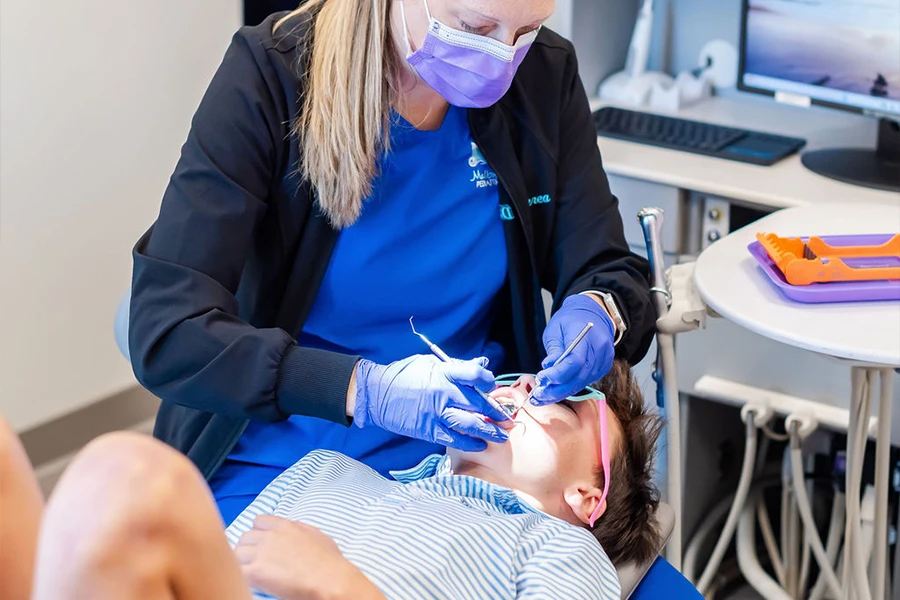
Tooth-colored fillings repair a child’s cavity with a composite resin that matches the natural tooth. The appointment is short, the tooth is numbed first, and the filling stops decay from spreading while keeping the tooth looking normal.
Hearing that your child has a cavity is deflating, especially if you have been fighting the nightly brushing battle. Cavities are the most common childhood dental issue we treat, and a filling is a routine fix. Here is what the treatment involves, why we use tooth-colored material, and what to expect the day of the appointment and afterward.
What Are Tooth-Colored Fillings?
A tooth-colored filling is a composite resin restoration. Our doctors remove the decayed portion of the tooth, clean the space, and rebuild it with a resin shaded to match your child’s enamel, then harden it with a curing light. Our dental fillings for kids page covers the service in more detail.
Composite bonds directly to the tooth, which means less healthy structure has to be removed to hold the filling in place. It contains no mercury, blends in visually, and works on both front and back teeth. That combination is why it is the material we use for the children we treat.
Here is how the common options compare:
When decay is caught very early, before a true cavity has formed, a filling may not be needed at all. Fluoride can remineralize a white spot, and dental sealants can shield grooves that are at risk. That is the whole argument for six-month visits: the earlier we look, the less we have to do.
How Do I Know If My Child Needs a Filling?
Most cavities in children are found at a checkup, not at home, because early decay causes no symptoms at all. Still, some signs should prompt a call.
Symptoms parents can notice
- Sensitivity or pain with cold, hot, or sweet foods and drinks
- A tooth your child avoids chewing on, or complaints on one side
- A visible white, brown, or black spot, or a hole you can see
- Food that keeps getting stuck in the same tooth
- Persistent bad breath that brushing does not resolve
- Pain that wakes your child at night, which deserves a same-day call
What we look for at an exam
During oral health exams we check each tooth for soft spots, staining, and changes in the grooves, and X-rays show decay between teeth where it cannot be seen. That is how small cavities get caught while they are still small.
Why waiting rarely helps
Untreated decay grows. It moves deeper into the tooth, can reach the nerve, and can affect the neighboring tooth. A cavity that needed a filling in March can need a crown, a nerve treatment, or a removal by fall. Treating it early is the shorter, gentler appointment.
Do Baby Teeth Really Need Fillings?
Yes, in most cases. Primary teeth are not placeholders you can neglect until they fall out on their own — they do real work, and losing them early has consequences.
- They hold space. Baby teeth guide the permanent teeth into position. Lose one too early and the adult tooth can come in crowded or crooked.
- They matter for eating and speech. A painful tooth changes how a child chews, and missing teeth can affect how sounds are formed.
- Decay spreads. An untreated cavity in a baby tooth can infect the area around the developing permanent tooth beneath it.
- Pain interferes with everything. Sleep, school, and appetite all suffer when a tooth hurts.
There are exceptions. If a baby tooth is already loose and about to come out naturally, filling it makes no sense. And if decay has gone too far for a filling to hold, our doctors may recommend a crown or, occasionally, a tooth extraction with a plan for the space. We will always explain which category your child’s tooth falls into and why.
What Happens During the Filling Appointment
A single filling is usually a short visit. Here is the sequence, so you can walk your child through it beforehand.
- Numbing. We apply a topical gel first, then the local anesthetic. Most children are surprised by how little they feel.
- Comfort support if needed. Nitrous oxide (laughing gas) is available for anxious children and wears off within minutes after the mask comes off.
- Removing the decay. The decayed tooth structure is cleaned away and the space is prepared for bonding.
- Placing the composite. The resin is applied in layers, shaped to match the tooth’s natural contours, and hardened with a curing light.
- Checking the bite. We polish the filling and have your child bite down so the tooth feels right, then adjust as needed.
For children with real dental fear, larger treatment plans, or sensory sensitivities, we discuss sedation dentistry options before the appointment rather than in the chair. Nobody should find out about the plan while lying down.
Aftercare that keeps the filling comfortable
- Wait until the numbness is fully gone before eating, and watch for lip or cheek biting — children do this without noticing.
- Start with soft foods and skip anything sticky or very hard for the rest of the day.
- Mild sensitivity for a few days is normal. Pain that gets worse, or a filling that feels high when biting, deserves a call.
- Brush and floss normally the same night. A filled tooth still gets cavities at the edges.
How Long Do Pediatric Fillings Last, and What About Cost?
A well-cared-for composite filling in a child’s tooth generally lasts for years, and in a baby tooth it typically needs to last only until that tooth is naturally replaced. What shortens the life of a filling is predictable: grinding, chewing ice or hard candy, and inconsistent brushing at the filling margins.
On cost, most dental plans cover fillings as basic restorative care, usually at a lower percentage than preventive services like cleanings and preventative dentistry visits. Coverage varies by plan, so our front desk will review your benefits and give you an estimate before treatment begins. If cost or timing is a concern, tell us — treatment can often be sequenced so the most urgent tooth is handled first.
Our post on insurance coverage for sealants explains why preventive benefits are usually the most generous part of a plan, which is the strongest argument for catching decay before it needs restoring.
Schedule Your Child’s Filling With Our Spanish Fort Pediatric Dentists — Gently, and Soon
If a cavity was spotted at your child’s last visit, or you have noticed sensitivity or a spot on a tooth, do not wait for it to hurt. Dr. Kelly Jones, Dr. Kristin Correa, and Dr. Elizabeth Clay are board-certified pediatric dentists who treat cavities in children every day, with kid-sized instruments and a pace that matches your child.
We care for families from Spanish Fort, Daphne, Bay Minette, Fairhope, Monroeville, and the Gulf Coast. Call or text (251) 626-9924, or request an appointment and our team will reach out to get your child on the schedule.
Frequently Asked Questions About Fillings for Children
Does getting a filling hurt?
The tooth is numbed first with a topical gel followed by local anesthetic, so children typically feel pressure and vibration rather than pain. The strangest part for most kids is the numb lip afterward, which is worth warning them about in advance.
How long does a filling appointment take?
A single small filling is usually a short appointment, and much of that time is numbing and getting your child comfortable. Multiple fillings take longer, and we may split them across visits depending on your child’s age and tolerance.
Are tooth-colored fillings as strong as silver ones?
For the size and location of most children’s cavities, composite performs well and bonds to the tooth, which lets us preserve more healthy structure. When a tooth has lost too much structure for any filling to hold reliably, a stainless steel crown is the more durable choice, and our doctors will tell you if that is the case.
Can a cavity be treated without drilling?
Sometimes. Very early decay can be remineralized with fluoride, and silver diamine fluoride can arrest active decay on a specific tooth without drilling, with the tradeoff that it darkens the treated area. Once a true cavity has formed and the enamel has broken down, a filling is the reliable fix.
What if my child is too anxious for the appointment?
Tell us before the visit. Many nervous children do fine with a slow explanation, a favorite stuffed animal, and laughing gas. For higher anxiety or longer treatment plans, we will talk through the sedation options and choose the mildest one likely to work for your child.