Trying to find out whether your dental plan will pay for your child’s sealants? Most dental insurance plans cover sealants under preventive care, often at 80-100% for permanent molars in children and teens. At Malbis Parkway Pediatric Dentistry, we help families verify benefits and explain any out-of-pocket costs before treatment begins.
What Are Dental Sealants for Kids?
Dental sealants are a thin, protective coating painted onto the chewing surfaces of your child’s back teeth. The resin flows into the deep grooves and pits where toothbrush bristles can’t easily reach, creating a smooth barrier that blocks out food particles and bacteria. Sealants are a preventive treatment, not a restorative one. That means they protect healthy teeth rather than repair damage that’s already there.
Sealants are most often placed on the permanent molars and premolars, since these teeth have the deepest grooves and the highest cavity risk. The chewing surfaces of back teeth are where most childhood cavities form, so shielding them early makes a real difference.
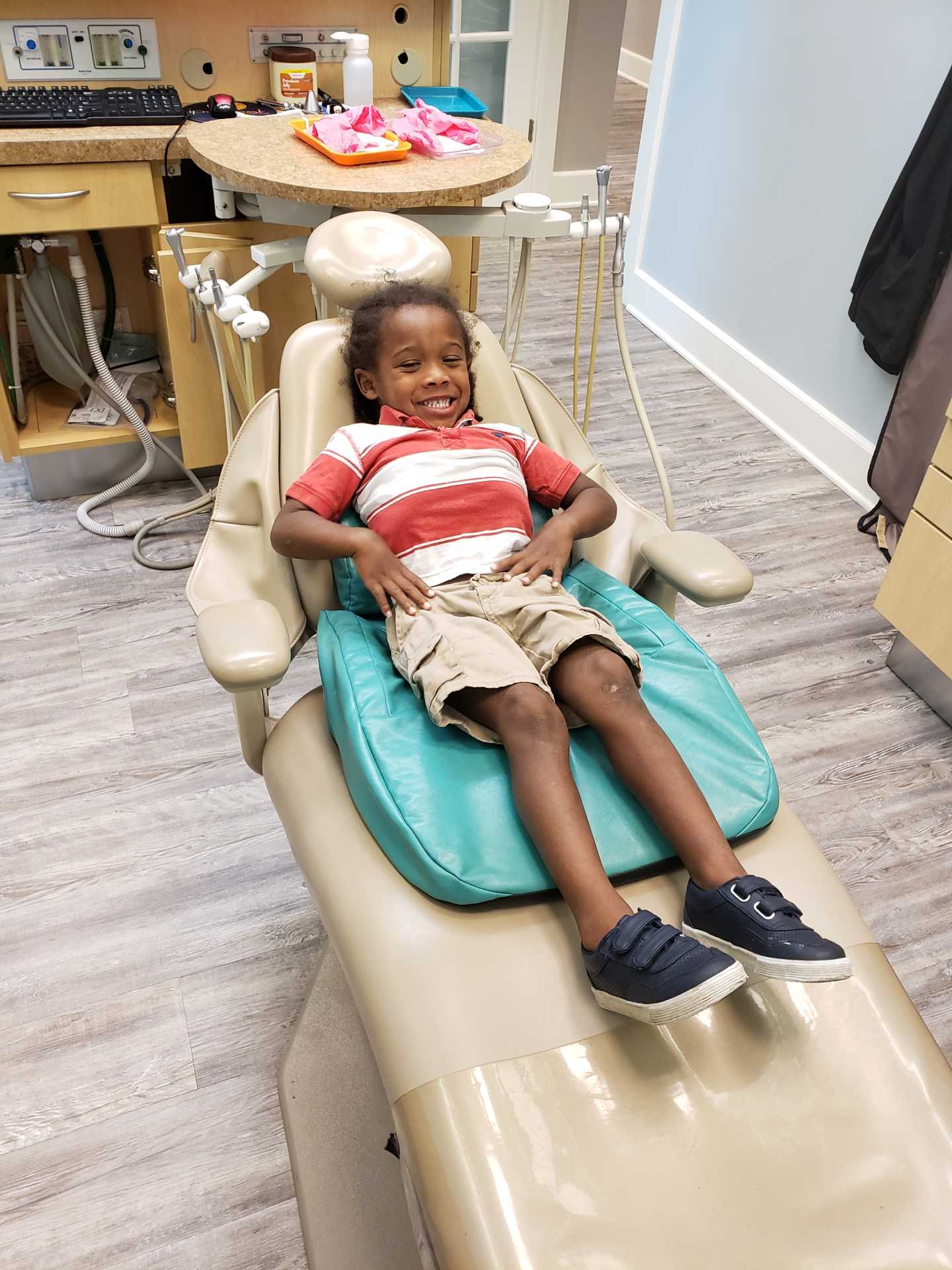
The appointment itself is quick and comfortable. Your child sits back, opens wide, and the work is usually finished in just a few minutes per tooth.
Many parents are surprised at how simple sealants really are. For young patients who feel nervous about dental work, sealants are often a reassuring first experience because nothing feels uncomfortable. It’s one of the easiest ways to give your child a head start toward a lifetime of healthy smiles. Placing sealants early also sets the tone for future visits, helping children associate the dentist with positive, low-stress moments rather than worry.
How Are Dental Sealants Applied?
The sealant process is fast, gentle, and completely non-invasive. Most children handle it without any anxiety, and the whole appointment usually takes just a few minutes per tooth. There’s no drilling, no shots, and no need for nitrous oxide (laughing gas).
Here’s how we apply sealants step by step:
- Clean and dry the tooth. We start with a thorough professional cleaning of the chewing surface to remove plaque and debris. Then the tooth is dried so the sealant can bond properly.
- Apply a mild etching gel. A safe, slightly acidic gel is brushed onto the enamel for a few seconds. This gently roughens the surface so the sealant adheres securely. The gel is rinsed off and the tooth is dried again.
- Paint on the liquid sealant. Our doctors carefully flow the tooth-colored resin into the grooves and pits of the chewing surface, making sure every crevice is filled.
- Cure with a special light. A small curing light shines on the tooth for about 20-30 seconds to harden the sealant into a smooth, protective shield.
That’s it. Your child can eat and drink right away. We’ll check the sealants at future oral health exams and reapply if any wear down over time.
Benefits of Dental Sealants for Children
Sealants offer some of the strongest cavity protection available for growing smiles. Because they shield the exact spots where decay is most likely to start, they’re one of the most effective preventive tools we recommend.
Key benefits include:
- Strong cavity protection. According to the CDC, sealants can prevent the majority of cavities on back teeth for years after application, dramatically lowering decay risk on molars. School-age children without sealants have been shown to develop far more cavities than those who have them.
- Protect hard-to-clean grooves. Even careful brushers can miss the deep pits on molar surfaces. Sealants fill those grooves so bacteria have nowhere to hide.
- Cost-effective prevention. A sealant typically costs far less than treating a cavity with a filling later, especially since most insurance plans cover them as preventive care.
- Comfortable and quick. There’s no drilling and no anesthesia. Most children don’t even realize the work is finished.
- Long-lasting protection. With good oral hygiene and regular dental visits, sealants can last several years before they need to be reapplied.
Sealants also support good habits. When children know their teeth are protected, they often feel more confident about brushing, flossing, and keeping up with their oral health exams. It’s a small step that delivers big peace of mind for parents.
Sealants vs. Fillings: What’s the Difference?
Sealants and fillings both protect teeth, but they serve very different purposes. Sealants prevent cavities from forming, while fillings repair damage after decay has already set in. Understanding the difference helps you make informed choices about your child’s care.
Sealants are applied to healthy teeth as a shield. Fillings are placed only after a cavity has formed and decayed tooth structure must be removed. One protects, the other restores.
Here’s a quick comparison:
The takeaway is simple. Sealants placed at the right time can help your child avoid the need for fillings altogether. Prevention is almost always easier, more comfortable, and less expensive than restoration. That’s why our doctors recommend sealants as soon as a child’s permanent molars come in, when the grooves are still fresh and easy to protect.
Does Insurance Cover Dental Sealants for Kids? Cost Factors Explained
Yes, most dental insurance plans cover dental sealants for kids, typically under preventive benefits. Coverage often ranges from 80-100% for permanent molars in children and teens, though specifics depend on your plan. Many policies have no waiting period for preventive services, so sealants can usually be scheduled right away.
That said, every dental plan is a little different. Here are the main factors that affect what you’ll pay:
- Age limits. Many plans cover sealants only for children and teens, often up to age 14 or 16. Some plans extend coverage further, others stop earlier.
- Which teeth are covered. Insurance usually covers permanent molars only. Sealants on premolars or baby teeth may not be reimbursed, even when clinically recommended.
- Plan type and tier. PPO, HMO, and discount plans each handle preventive care differently. Your annual maximum, deductible, and any frequency limits all play a role.
- Frequency limits. Most plans cover one sealant per tooth per lifetime, or allow reapplication only after a set number of years.
- In-network status. Costs are typically lower when your provider participates with your plan.
When sealants aren’t covered, the out-of-pocket cost is usually modest compared to the cost of treating a future cavity. We recommend asking for a written estimate before treatment so you know exactly what to expect.
Our doctors and staff at Malbis Parkway Pediatric Dentistry are happy to help you verify your benefits before the appointment so there are no surprises. Just bring your insurance information when you call, and we’ll walk you through what’s covered, what your portion may be, and the best timing for placement. If you’d like to plan ahead, our front desk can also explain how frequency limits and annual maximums might affect the timing of treatment for more than one child.
Which Kids Should Get Dental Sealants?
Sealants are most effective when applied soon after permanent molars erupt, while the grooves are still pristine. According to the American Academy of Pediatric Dentistry, most children benefit from sealants on their first permanent molars (around age 6) and second permanent molars (around age 12).
Your child may be a strong candidate for sealants if:
- Their permanent molars have recently come in. The sooner sealants go on, the better the protection. Fresh enamel bonds beautifully with sealant resin.
- Their back teeth have deep grooves or pits. Some children naturally have more pronounced fissures, which makes brushing those surfaces harder.
- They have a higher cavity risk. Children with previous cavities, weaker enamel, orthodontic appliances, or special healthcare needs often benefit most.
- They’re still developing strong brushing habits. Sealants offer extra protection while children build the dexterity to clean their molars thoroughly.
Sealants aren’t right for every tooth or every child, which is why a careful evaluation matters. Our board-certified pediatric dentists check each tooth at your child’s oral health exam and recommend sealants only when they’ll make a real difference. We treat infants, children, teens, and youth with special needs, so every recommendation is tailored to the young patient in front of us. If your child is ready, our doctors are glad to walk you through coverage and the best timing for sealants so your family can give them the smile they deserve.
Frequently Asked Questions About Dental Sealants
How long do dental sealants last?
With good care, dental sealants typically last several years before needing reapplication. Our doctors check them at every oral health exam and can repair or replace any that have worn down. Avoiding sticky candies, ice chewing, and hard objects helps sealants stay intact longer and keeps your child on track for a lifetime of healthy smiles.
Are dental sealants safe for children?
Yes. Dental sealants have been used safely for decades and are recommended by the American Academy of Pediatric Dentistry and the American Dental Association. The amount of material used is very small and fully cured before your child leaves the chair. For most children, sealants are one of the safest, gentlest preventive treatments available.
Can sealants be applied over a small cavity?
In some cases, yes. If decay is caught very early and hasn’t broken through the enamel, a sealant may stop it from progressing. However, if a true cavity has formed, the tooth needs a filling instead. Our doctors evaluate each tooth carefully before deciding which approach is right.
Do baby teeth need sealants?
Sometimes. Most insurance plans only cover sealants on permanent teeth, but baby molars with deep grooves can still benefit, especially for children at higher cavity risk. We’ll let you know if sealants on baby teeth are a smart choice for your child’s situation.
How much do sealants cost without insurance?
Out-of-pocket costs vary by region and plan. In many cases, a single sealant runs in the range of a routine preventive service, often a fraction of what a filling would cost later. The good news is that sealants are typically one of the more affordable preventive treatments, and they often save families money by helping avoid fillings down the road. Our front desk can give you a written estimate before treatment begins.
Does my child still need to brush with sealants?
Absolutely. Sealants protect the chewing surfaces of back teeth, but they don’t cover the sides, fronts, or between teeth. Daily brushing, flossing, and regular professional cleanings remain essential for happy, healthy smiles. If you’d like to have your child’s teeth evaluated for sealants, our board-certified pediatric dentists are happy to help. You can request an appointment anytime, and we’ll review coverage and recommend the best timing together.