Stay calm, find the tooth, and call your pediatric dentist right away. For a permanent tooth, pick it up by the crown and place it in milk — time matters. For a baby tooth, do not put it back in the socket.
Knocked-out teeth happen on playgrounds, in driveways, at ball fields, and on kitchen floors. The moment is frightening, and parents usually have about ten seconds of clear thinking before the panic sets in. Save this page. The steps below cover what to do first, how baby teeth and permanent teeth differ, and what happens once you reach us.
First Steps in the First Five Minutes
Your priorities are your child’s safety, the bleeding, and the tooth — in that order.
- Check your child first. If there was a blow to the head, loss of consciousness, vomiting, confusion, or a possible broken jaw, that is an emergency room trip, not a dental visit. Teeth can wait; heads cannot.
- Control the bleeding. Have your child bite down on clean gauze or a damp washcloth for about ten minutes. Steady pressure works better than checking every thirty seconds.
- Find the tooth and pick it up by the crown. The crown is the chewing part. Avoid touching the root, which carries the cells that make reattachment possible.
- Rinse it briefly with milk or saline if it is dirty. A few seconds only. Do not scrub it, do not use soap, and do not dry it off.
- Store it correctly. Cold milk is the best household option. Saline works. If nothing else is available, have an older child hold it inside their cheek. Plain water is a last resort, and never let the tooth dry out.
- Call us right away. Call or text (251) 626-9924. Our doctors are on-call for pediatric dental emergencies, and we will tell you where to go and how fast.
A cold compress on the lip or cheek helps with swelling on the way in. If there is a cut inside the mouth that keeps bleeding heavily after ten minutes of pressure, treat that as urgent.
Was It a Baby Tooth or a Permanent Tooth?
This is the fork in the road, and it changes what you should do. A knocked-out permanent tooth may be replantable. A knocked-out baby tooth should not be put back.
Permanent tooth
A permanent tooth has the best chance when it is kept moist and seen quickly. The root surface cells begin to die once the tooth dries out, which is why milk and speed matter so much. If you are comfortable doing it and your child is old enough to cooperate, the tooth can sometimes be gently reinserted into the socket and held in place with light finger pressure or a bite on gauze while you travel. If you are not comfortable, milk is the right call.
Baby tooth
Do not attempt to replace a baby tooth in the socket. Reinserting it risks damaging the developing permanent tooth sitting directly above it. That does not mean you should skip the appointment — we still need to check for root fragments, injuries to the gum and bone, and whether a space maintainer should be considered.
Not sure which it was?
Bring the tooth and call us. Age is a rough guide, since most children begin losing baby teeth around six and finish in the early teens, but mixed dentition makes guessing unreliable. Roots also differ: baby teeth have shorter, thinner roots, while a permanent tooth usually comes out with a longer root attached.
Why a Knocked-Out Baby Tooth Still Needs a Visit
Parents often assume a baby tooth that was going to fall out anyway is not worth an appointment. It usually is, for four reasons.
- Root fragments can stay behind. A piece left in the socket can become a source of infection.
- The permanent tooth underneath may be affected. Trauma to the area can affect how the adult tooth develops or erupts, and we want a baseline record of the injury.
- Space can be lost. Primary teeth hold position for the adult teeth behind them. Losing one early can crowd the space, which is why our doctors discuss whether a space maintainer makes sense. This is the same reason we take kids tooth extractions seriously rather than treating baby teeth as disposable.
- Soft-tissue and bone injuries hide. Cuts, bruised bone, and neighboring teeth that were loosened in the same fall are easy to miss at home.
Our emergency dental care for kids page lists which situations need a call immediately and which can wait for the next morning, which is worth a look before you need it.
What Happens at the Emergency Appointment
The visit is more straightforward than most parents expect, and it starts with getting your child settled.
Comfort first
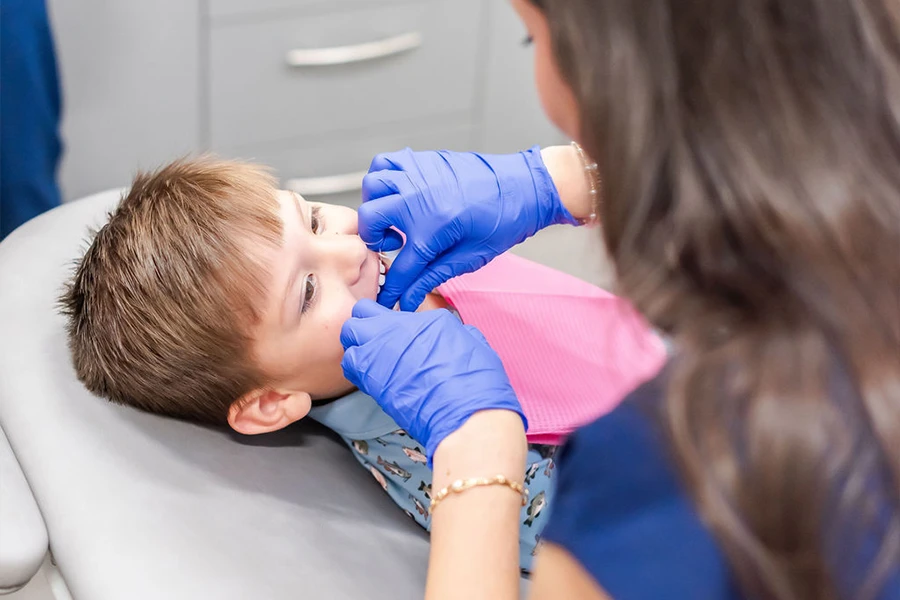
A frightened, hurting child cannot be examined well. Our team meets each child where they are, explains what we are doing in words they understand, and takes the pace the child needs. Our office is built for exactly this — nautical decor, kid-sized instruments, and a staff that does this every week.
Exam and X-rays
We examine the socket, the surrounding teeth, the gums, and the bite, and take X-rays to check the root, the bone, and the developing permanent tooth if a baby tooth was lost.
Treatment
For a replanted permanent tooth, that usually means repositioning and stabilizing it, then a series of follow-up checks over the following weeks and months. For a baby tooth, treatment focuses on cleaning the site, managing any bleeding or fragments, controlling pain, and planning for the space. Chips and fractures on neighboring teeth may need restoration.
Aftercare at home
Expect soft foods, no straws, gentle brushing around the site, and instructions about pain relief and what to watch for. Call us if swelling increases, pain worsens after a few days, or the area develops a bad taste or smell — those can point to infection.
Preventing the Next One
You cannot child-proof a bicycle, but a few things genuinely reduce the odds and the damage.
- Mouthguards for sports. Any activity with contact, sticks, balls, or wheels qualifies. Ask us about the options at your child’s next visit.
- Helmets that actually fit. Bikes, scooters, and skateboards all count.
- Car seats and boosters used correctly. Dental trauma from crashes is common and preventable.
- Baby-proof the hard edges. Coffee tables, tub edges, and stair landings cause a surprising share of toddler tooth injuries.
- Address chronic grinding or a bite that traumatizes front teeth. Teeth that stick out take more hits.
- Keep up with routine visits. Decayed or weakened teeth break more easily than healthy ones.
Call Our On-Call Spanish Fort Pediatric Dentists — Do Not Wait It Out
If your child has knocked out a tooth, call or text (251) 626-9924 now. Dr. Kelly Jones, Dr. Kristin Correa, and Dr. Elizabeth Clay are board-certified pediatric dentists who are on-call for pediatric dental emergencies, and a fast call gives a permanent tooth its best chance.
We are at 9807 McSara Ct. in Spanish Fort and treat families from Daphne, Bay Minette, Fairhope, Monroeville, and across the Gulf Coast — including patients who come to us as their Daphne pediatric dentist. For non-urgent concerns, you can request an appointment and our team will reach out.
Frequently Asked Questions About Knocked-Out Teeth in Children
How long do I have to save a knocked-out permanent tooth?
Sooner is always better, and the first hour is the window everyone in dentistry talks about. The tooth’s chances drop as the root surface dries, which is why storing it in cold milk while you call us matters as much as the drive itself.
Should I put a knocked-out baby tooth back in?
No. Reinserting a primary tooth can damage the permanent tooth developing above it. Bring the tooth with you so we can confirm it came out whole, and we will check the socket and plan for the space.
Can I rinse the tooth with water?
Only briefly, and only if it is visibly dirty. Milk or saline is much better, water is a last resort, and scrubbing the root is the one thing to avoid entirely. Never let the tooth sit out dry.
Will my child need a space maintainer?
Sometimes. It depends on which tooth was lost, your child’s age, and how much time remains before the permanent tooth erupts. X-rays at the visit tell us whether the neighboring teeth are likely to drift into the gap.
What if the tooth is only loose or pushed out of place?
Do not force it back into position, keep your child on soft foods, and call us the same day. Loosened and displaced teeth often settle well with monitoring, but they need an exam and X-rays first to rule out root and bone injury. Regular oral health exams afterward let us track the tooth over time.