Curious about the right age for your child’s first pediatric dental visit? Children should first see a pediatric dentist by their first birthday or within six months of their first tooth coming in. Both the American Academy of Pediatric Dentistry (AAPD) and the American Dental Association recommend this timeline to establish a dental home and protect early oral health.
That first tooth usually appears around six months of age. Once it does, the clock starts. Many parents wait until age 3 or later, often because they assume baby teeth don’t need much attention. That delay can let cavities, feeding issues, or bite problems develop unnoticed.
At Malbis Parkway Pediatric Dentistry, we see infants, children, teens, and youth with special needs from their very first tooth onward. Starting early helps your child build a positive dental experience and gives our doctors a chance to catch small concerns before they grow into bigger ones.
A first visit is short, gentle, and informative. It’s as much about helping parents feel confident as it is about checking those tiny teeth. You’ll leave with answers to your questions and a clear plan for keeping your child’s smile healthy.
What Happens at Your Child’s First Pediatric Dentist Visit
The first appointment is designed to be welcoming, brief, and stress-free. Our doctors and staff take time to get to know your child and answer your questions. Most first visits last about 20 to 30 minutes.
Here’s what you can expect:
- A gentle exam. One of our board-certified pediatric dentists will check your child’s teeth, gums, jaw, and early bite development. For very young children, this is often done with your little one sitting on your lap.
- A feeding and habits review. We’ll talk about bottle use, nursing, sippy cups, and any nighttime feeding habits that can affect tooth health.
- Cleaning guidance. You’ll learn how to clean baby teeth properly, when to start using fluoride toothpaste, and how much to use at each age.
- A brushing demonstration. We’ll show you the best technique for brushing tiny teeth, including how to position your child and which type of toothbrush to use.
- A talk about habits. Teething, thumb sucking, and pacifier use all come up. We’ll let you know what’s normal and when to start helping your child move on from certain habits.
The visit is intentionally low-pressure. We want your child to leave smiling, not stressed. Our nautical-themed waiting area helps set the tone before the appointment even begins, and our doctors and staff use kid-friendly language throughout the entire experience.
If anything unusual shows up during the exam, we’ll explain it clearly and walk you through next steps so you always know what to expect at home.
Benefits of Starting Pediatric Dental Care Early
Early dental visits do far more than check for cavities. They catch decay and developmental concerns sooner, build your child’s comfort in the dental chair, lower long-term treatment costs, and give parents practical tools for home care. Together, these benefits lay the groundwork for a lifetime of healthy smiles that lasts well into adulthood.
Key benefits include:
- Cavity prevention. Early childhood cavities rank among the most common chronic conditions in young children, according to the AAPD. Early visits help catch decay before it spreads.
- Earlier detection of developmental issues. Our doctors can spot signs of tongue tie, lip tie, bite misalignment, or jaw concerns while they’re easier to address.
- A positive dental experience. Children who start visiting the dentist young tend to feel more comfortable in the chair. That comfort carries into childhood and beyond.
- Lower long-term costs. Preventive care almost always costs less than emergency treatment. Catching small problems early avoids fillings, crowns, or extractions later on.
- Confident, informed parents. You’ll get answers to questions about diet, fluoride, pacifier weaning, and what’s normal at each stage of development.
Children who see a pediatric dentist early are more likely to keep up with routine care as they grow. That builds the kind of comfort and trust that turns the dentist into a familiar, friendly place. It’s exactly the foundation that gives your child the smile they deserve.
Pediatric Dentist vs. General Dentist for Young Children
Both pediatric and general dentists can care for children, but their training and focus differ in important ways. Here’s a quick comparison:
Pediatric dentists complete extra years of training focused specifically on children’s behavior, growth, and developmental dental needs. They also work daily with children who have special healthcare needs.
A general dentist may be appropriate for older children with no anxiety, no developmental concerns, and a strong dental history. For infants, toddlers, anxious children, or any child with special needs, a board-certified pediatric dentist is the better fit.
At Malbis Parkway Pediatric Dentistry, our doctors, Dr. Kelly M. Jones, DMD, Dr. Kristin Correa, DMD, and Dr. Elizabeth Clay, DDS, are all board-certified pediatric dentists with active memberships in the AAPD, ADA, and Alabama Dental Association.
Cost Factors for a Child’s First Dental Visit
A child’s first dental visit is often one of the more budget-friendly healthcare appointments of early childhood. Many dental insurance plans cover preventive care for children, including the first exam, cleaning, and fluoride treatment. For uninsured families, first visits are typically priced as a single exam fee.
Several factors can affect the total cost:
- Exam type. A simple knee-to-knee infant exam costs less than a full cleaning and x-ray appointment for an older child.
- Cleaning. Professional cleanings are usually included in preventive care benefits.
- X-rays. Most very young children don’t need x-rays at the first visit. They’re typically introduced around age 4 to 6, depending on the child.
- Fluoride treatment. A topical fluoride varnish is often applied during preventive visits and is usually covered.
- Follow-up needs. If decay or developmental issues are found, additional appointments may be recommended.
Many dental insurance plans cover preventive pediatric care at a high percentage, and some cover it in full. Programs such as Medicaid and CHIP may also cover routine pediatric dental visits for eligible children. Investing in early prevention almost always costs less than treating problems later, both financially and in terms of your child’s comfort.
Our front desk staff can walk you through your benefits and answer billing questions before your appointment, so there are no surprises on the day of the visit.
Is Your Child Ready for Their First Dental Visit?
Your child is ready for their first dental visit as soon as their first tooth appears or by their first birthday, whichever comes first. There’s no such thing as too early once teeth begin erupting.
Signs it’s time to schedule include:
- A visible first tooth
- Active teething (drooling, chewing on objects, fussiness)
- Feeding or latching concerns
- Visible spots or discoloration on any teeth
- Family history of early childhood cavities
Children with special healthcare needs may benefit from earlier visits, especially if feeding, oral motor skills, or sensory sensitivities are a concern. Our doctors have experience caring for infants, children, teens, and youth with special needs, and we tailor each visit to your child’s comfort level so every appointment feels manageable.
To help your child feel ready:
- Talk about the visit in positive, simple terms.
- Read a children’s book about going to the dentist.
- Schedule the appointment for a time when your child is usually well-rested.
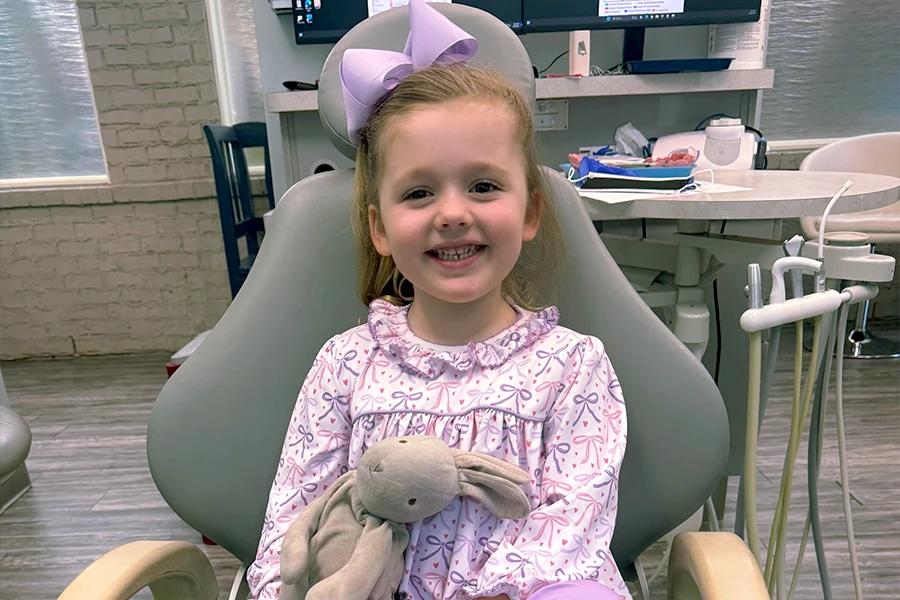
- Bring a favorite stuffed animal or comfort item.
- Stay calm and upbeat. Children often mirror their parents’ emotions.
Our nautical-themed waiting area and friendly doctors and staff help set a relaxed tone the moment you walk in, making that first visit a place where children love the dentist.
Frequently Asked Questions About Children’s First Dental Visits
Are baby teeth really that important to my child?
Yes. Baby teeth help your child chew, speak clearly, and smile with confidence. They also hold space for adult teeth and guide them into the right position. When baby teeth are lost too early to decay or injury, it can lead to crowding and bite problems later. Healthy baby teeth set the stage for healthy adult teeth.
What should I use to clean my baby’s teeth?
Before teeth come in, wipe your baby’s gums with a clean, damp washcloth after feedings. Once the first tooth erupts, switch to a soft infant toothbrush with a tiny smear of fluoride toothpaste (about the size of a grain of rice). Brush twice a day, especially before bed.
Should I use toothpaste with my child, and how much?
Yes, fluoride toothpaste is recommended starting with the first tooth. Use a rice-grain-sized smear for children under 3. Once your child turns 3 and can spit reliably, increase to a pea-sized amount. Always supervise brushing until at least age 7 or 8.
How often does my child need to see the dentist?
Most children should visit every six months for a routine oral health exam and professional cleaning. Some children with a higher cavity risk or specific developmental concerns may need more frequent visits. Our doctors will recommend a schedule that fits your child’s needs.
What should I do if my child has a toothache?
Start by rinsing your child’s mouth with warm water and checking for any food trapped between the teeth. A cold compress on the outside of the cheek can help with swelling. Call our practice as soon as possible so we can evaluate the cause. Our doctors are on-call for pediatric dental emergencies.
Are thumb sucking and pacifier habits harmful?
Thumb sucking and pacifier use are normal in infancy and early toddlerhood. Most children naturally stop between ages 2 and 4. If the habit continues past age 3 or 4, it can begin to affect tooth alignment and jaw development. We’ll discuss your child’s habits at each visit and offer gentle strategies if it’s time to start weaning.
How do I schedule my child’s first visit?
Getting started is simple. Malbis Parkway Pediatric Dentistry is where little smiles come to shine, and our board-certified pediatric dentists would love to welcome your child to our practice. When you’re ready, you can request an appointment online, and our doctors and staff will help you find a time that works for your family and answer any questions before you arrive.