A children’s dentist differs from a regular dentist in a few key ways. At Malbis Parkway Pediatric Dentistry, the answer comes down to specialized training, child-focused care, and a practice built entirely around young patients. Our board-certified pediatric dentists treat infants, children, teens, and youth with special needs, with every detail designed for growing smiles.
What Is a Pediatric Dentist?
A pediatric dentist is a dental specialist who completes 2-3 additional years of training after dental school to treat children from infancy through the teen years. This residency covers child psychology, behavior guidance, growth and development, and the unique needs of young patients, including those with special healthcare needs.
General dentists are trained to care for patients of all ages, but a children’s dentist focuses only on children. That difference shapes every part of the experience.
Our pediatric dentists are trained to:
- Manage dental anxiety unique to young patients
- Monitor jaw, bite, and tooth development over time
- Communicate with children at their level
- Care for infants, children, teens, and youth with special needs
The result is a practice built around how children actually think, feel, and grow.
How Pediatric Dental Care Works Differently
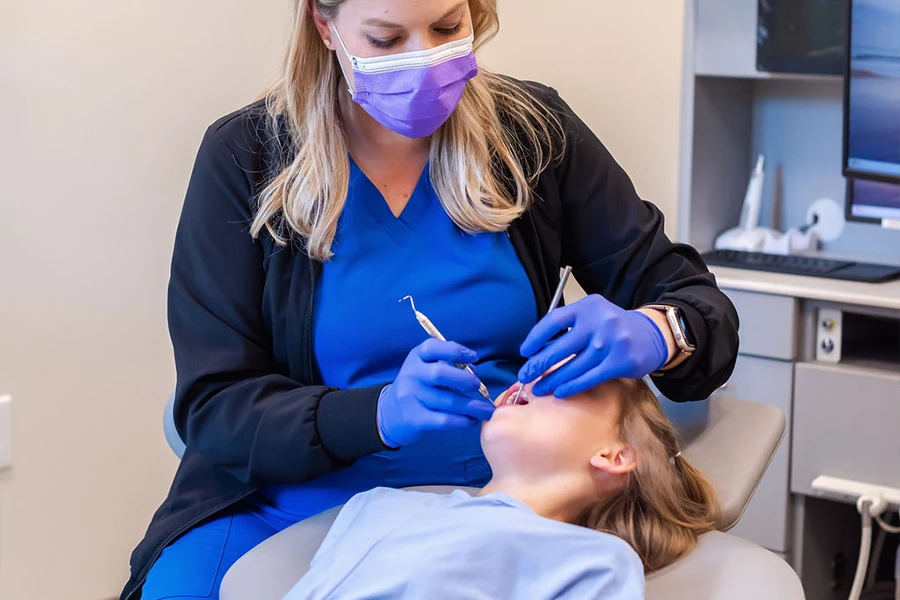
Pediatric dental care differs from general care in three main ways: smaller tools sized for little mouths, behavior guidance that explains each step before it happens, and an environment designed to put children at ease. Our board-certified pediatric dentists center every choice around comfort. The difference is noticeable the moment you walk in.
Here’s how care shifts when your child sees a pediatric specialist:
- Child-sized tools and equipment. Smaller instruments fit smaller mouths comfortably, making each visit easier on your child.
- Behavior guidance techniques. Methods like tell-show-do let children see and understand each step before it happens, which builds trust and lowers fear.
- A welcoming office environment. Our nautical-themed waiting area helps children feel curious instead of anxious from the moment they arrive.
- Prevention sits at the heart of what we do, so our doctors and staff emphasize good habits, sound nutrition, and fluoride to protect developing teeth before problems ever start.
- Growth monitoring. We track eruption patterns, bite alignment, and jaw development at each oral health exam.
Children also respond well to consistency. Seeing the same doctors and staff visit after visit helps them feel safe. That predictability is one reason families choose a children’s dentist for connected care for growing smiles.
Benefits of Choosing a Children’s Dentist
Choosing a pediatric specialist gives your child more than a professional cleaning. It shapes how they feel about dental care for years to come.
How Does a Children’s Dentist Reduce Dental Anxiety?
Kind, age-appropriate communication helps children build positive associations early. Comfortable options like nitrous oxide (laughing gas) help anxious children relax during procedures. Seeing the same friendly doctors and staff at each visit also lowers fear over time. Many families across the gulf coast tell us their child looks forward to coming back, which is exactly the kind of positive dental experience we want to create.
Why Is Specialized Care for Baby Teeth Important?
Primary teeth guide permanent teeth into place, and our doctors are trained to protect both. Routine exams catch cavities, crowding, and developmental concerns when they’re easiest to address. Pediatric training also prepares us to care for children with special needs and to perform tongue tie procedures that other practices may not be equipped to handle.
The goal is bigger than one appointment. We want every child to leave feeling proud of their teeth, ready to come back, and on track for a lifetime of healthy smiles.
Pediatric Dentist vs. Regular Dentist: Key Differences
A children’s dentist completes extra residency training focused only on children, uses child-sized equipment, and works in offices designed for young patients. A general dentist treats patients of all ages with standard adult equipment in a clinical setting. The biggest difference is specialization: our board-certified pediatric dentists center every part of care around how children grow, behave, and feel.
Here’s a side-by-side look:
Both types of dentists provide skilled care. The question is fit. For young children, a specialist often makes each visit more positive and productive. That’s why so many parents in Spanish Fort choose a children’s dentist for their little ones.
Cost Factors for Pediatric Dental Care
The cost of pediatric dental care depends on the type of treatment, whether nitrous oxide (laughing gas) is needed, your insurance plan, and how often your child is seen. Preventive visits like oral health exams and professional cleanings are typically the most affordable, while restorative work costs more. Consistent preventive care often lowers long-term costs by catching issues early.
Common cost factors include:
- Type of treatment. Preventive care like exams, professional cleanings, and fluoride costs less than restorative procedures like fillings or crowns.
- Whether your child needs nitrous oxide or hospital-based care also matters. The in-office option is comfortable and economical, while more involved cases handled in a hospital setting tend to raise the total.
- Insurance coverage. Pediatric dental benefits vary widely. Many plans cover preventive visits at a higher percentage.
- Children seen regularly, typically every six months, tend to face fewer surprises than those who visit only when something hurts.
- Early intervention. Catching cavities or alignment issues early is almost always less expensive than treating advanced problems later.
In many cases, families find that staying on a steady preventive schedule keeps costs predictable over the years compared to delaying care until a problem grows.
Is a Children’s Dentist Right for Your Child?
A pediatric dentist is a good fit for most children, especially those who are very young, anxious, or have special healthcare needs. According to the American Academy of Pediatric Dentistry (AAPD), children should have their first oral health exam by age 1 or within six months of the first tooth coming in.
A pediatric specialist is especially helpful if:
- Your child is an infant or toddler getting their first dental visit
- Your child experiences dental anxiety or has had a difficult past experience
- Your child has special healthcare needs
- You want guidance on thumb sucking, pacifier use, or other oral habits
- Your child needs emergency care or a tongue tie evaluation
- You’d like consistent monitoring of bite and jaw growth
Starting children off right is one of the best gifts you can give them. For families in Spanish Fort, a children’s dentist helps make every visit a positive, comfortable experience for your child.
Frequently Asked Questions
Are baby teeth really that important for my child?
Yes, baby teeth play a big role in your child’s development. They help with chewing, speaking clearly, and guiding permanent teeth into the correct position. When baby teeth are lost too early to decay or injury, it can lead to crowding and alignment issues later. Protecting them now supports a healthier smile down the road.
When should I schedule my child’s first dental appointment?
The AAPD recommends a child’s first oral health exam by age 1 or within six months of the first tooth appearing. Early visits give our doctors and staff a chance to check development, answer your questions, and help your child feel at home in the dental chair.
How often does my child need to see the dentist?
Most children benefit from an oral health exam and professional cleaning every six months. Some children may need to be seen more often based on cavity risk, growth changes, or special needs. We’ll recommend the right schedule for your child after their first visit.
What should I do if my child has a toothache?
Rinse your child’s mouth with warm water and check gently for anything stuck between the teeth. You can offer a cold compress on the outside of the cheek if there’s swelling. Call us right away to schedule an evaluation. Our board-certified pediatric dentists are on-call for pediatric dental emergencies, so families in Spanish Fort can reach us when it matters most.
Are thumb sucking and pacifier habits harmful?
Thumb sucking and pacifier use are normal in early childhood. Most children stop on their own between ages 2 and 4. If the habit continues past that age, it can affect tooth alignment and jaw development. Our doctors can help guide your child through gently breaking the habit.
Should I use toothpaste with my young child?
Yes. For children under 3, use a smear of fluoride toothpaste about the size of a grain of rice. For children ages 3-6, use a pea-sized amount. Supervise brushing until your child can spit consistently and clean all surfaces well on their own.
Ready to give your child the smile they deserve? Our board-certified pediatric dentists would love to welcome your child to a place where little smiles come to shine. We are a children’s dentist loved by families across the gulf coast, and we’d be honored to help your child build happy, healthy smiles. Request an appointment to get started.