
To prepare a child with autism for the dentist, preview the visit with pictures or a social story, practice mouth-opening and brushing at home, share your child’s sensory triggers with the office ahead of time and ask for a familiarization visit before any treatment.
For many autistic children, a dental visit stacks up several hard things at once: a new place, bright lights, unfamiliar sounds and someone working close to their face. The good news is that much of that stress can be eased with preparation at home and a practice that adapts to your child. Here is a step-by-step approach our pediatric dentists in Spanish Fort share with families.
Why Can Dental Visits Be Hard for Autistic Children?
Dental care is very sensory. Overhead lights, the sound of suction, the taste of toothpaste, the feel of gloved fingers and the recline of the chair can all be overwhelming for a child with sensory processing differences. Changes to routine and waiting in a busy room can add to the stress before the visit even begins.
Communication can be another hurdle. A child may not be able to say what hurts or what feels scary, and verbal instructions alone may not land. That is why adapted communication, such as picture cards, modeling and extra processing time, is a core part of how our team works with children who have autism.
Brushing and flossing at home can also be more difficult, which can raise the risk of cavities and gum problems. That makes regular, positive dental visits even more valuable, and it is why we focus on building trust first.
How Should You Prepare Your Child in the Weeks Before?
Start early and keep it low pressure. A few short, repeated practice moments usually work better than one big conversation the night before. Ideas many families find helpful include:
- A social story or picture schedule. Show each step in order: car ride, waiting room, chair, counting teeth, brushing, prize or reward, going home.
- Pretend play. Take turns being the dentist with a stuffed animal or doll, using a toothbrush and a small flashlight.
- Mouth practice. Practice opening wide and holding for a slow count of three, then build up over time.
- Sensory rehearsal. Let your child lie back in a recliner, wear sunglasses under a bright light or listen to recorded clinic sounds if that helps.
- Brushing routine. Keep a predictable daily brushing routine so the toothbrush feels familiar.
Use the same simple words each time, such as “count teeth” or “tooth tickle,” and avoid words that might sound scary. Praise any small step your child takes, even just sitting in the pretend dentist chair for a moment.
What Should You Tell the Dental Office Before the Visit?
You know your child best, and that knowledge shapes everything we do. Ahead of the first visit, we ask parents about their child’s needs, what sets off sensory overload, how they communicate and their health history. Tell us what went well or badly at earlier dental visits and any phrases or routines that settle your child.
Useful details include how your child communicates, whether they use a device or picture cards, any sounds, textures, tastes or smells that bother them, favorite comfort items or topics, and the time of day your child tends to do best. If your child sees a pediatrician, therapist or other specialist, let us know so we can coordinate with their care team when it helps.
What Is a Familiarization Visit?
Often the hardest moment is simply walking through an unfamiliar door. A familiarization visit is a no-treatment trip to our office: your child can look around, say hello to the doctors and team, try out the chair and touch the instruments. One visit is enough for some kids, while others need a few.
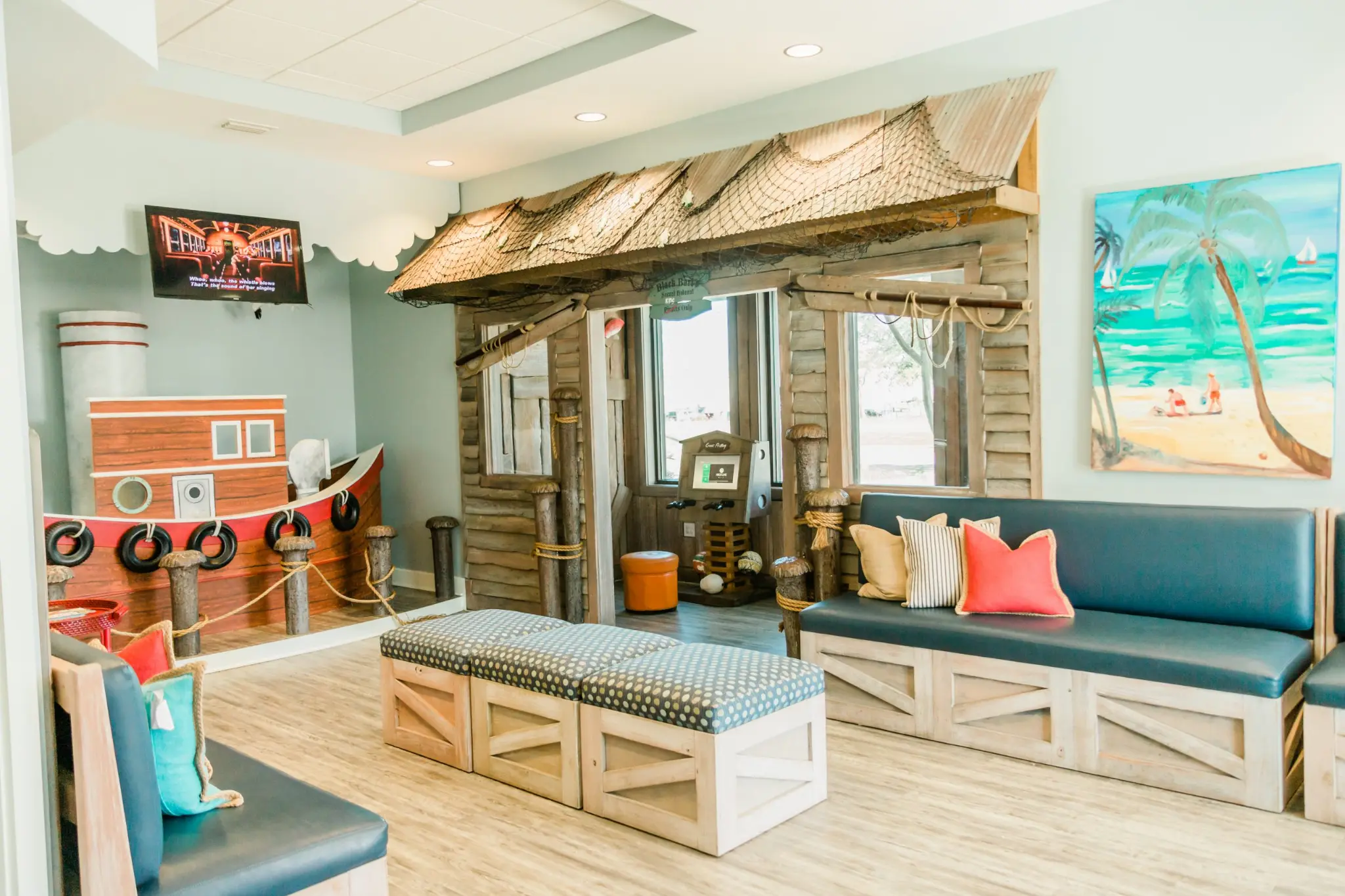
Our nautical-themed waiting area is designed to feel welcoming without being overwhelming, and these early visits let your child get used to it at their own pace. When your child is ready, an exam can follow. To see how we approach the rest of care, read about our special needs dentistry process.
What Can You Do on the Day of the Appointment?
Keep the day as predictable as you can. Review the picture schedule in the morning, bring comfort items such as headphones, a weighted lap pad, sunglasses or a favorite toy, and plan something enjoyable for afterward. Arriving a few minutes early without rushing can help, though if waiting is hard, let the front desk know when you arrive.
The table below summarizes common supports and what each one helps with. Not every child needs all of them, so choose the ones that fit.
| Support | What it looks like | Why it helps |
|---|---|---|
| Visual schedule | Pictures of each step, checked off as you go | Shows what comes next and when it ends |
| Sensory adjustments | Dimmed lights, less background noise, sunglasses or headphones | Reduces overload from light and sound |
| Tell-show-do | Naming a tool, showing it on a finger or stuffed animal, then using it | Makes each step predictable |
| Breaks | Pausing whenever your child needs a moment | Gives time to regulate and keeps trust intact |
| Shorter or split visits | Spreading care across more than one appointment | Keeps each visit manageable |
During the exam our team uses simple language, visual cues and plenty of positive reinforcement. If your child needs breaks, we take them, and if a different position is more comfortable, we adapt. Our post on whether pediatric dental exams hurt explains what a gentle exam involves.
What If Your Child Needs Treatment?
When an exam shows a cavity or other problem, we talk through the right approach with you. Many children do well with treatment in the chair using behavior guidance techniques. For added relaxation, nitrous oxide (laughing gas) is available, and you can read how sedation dentistry for kids works.
For children with significant medical or behavioral complexity, or when other approaches are not a good fit, hospital dentistry under general anesthesia may be the safest and kindest option. Parents do not need to choose an approach ahead of time; we work that out with you at the first visit.
How Can You Make Brushing Easier at Home?
After treatment, our team puts together a home care plan shaped around what your child can do and how your household runs. It may suggest an adapted toothbrush, techniques for a child who is sensitive to touch or taste, or ways to make brushing a predictable part of every day.
Try brushing at the same time and in the same place each day, use a visual timer or a favorite song to mark the start and finish, and experiment with mild-flavored toothpaste if strong mint is a trigger. Some children prefer to brush their own teeth first and then let a parent finish. Regular preventive visits, usually every six months, help keep small issues from becoming big ones.
Frequently Asked Questions
Should I tell my child about the dentist visit ahead of time?
Most autistic children do better with advance notice and a clear picture of what will happen. How far ahead depends on your child; some do well with a week of previewing, while others prefer to hear about it a day or two before.
How can I help my child during the appointment?
Talk with our team before the visit about how you can support your child. A calm, familiar adult, a comfort item and the same simple words you practiced at home can all help your child feel safe.
What if my child cannot sit in the dental chair?
Tell us in advance. We can adapt positioning, take breaks, use shorter visits and discuss options such as nitrous oxide or hospital dentistry if needed.
How often should a child with autism see the dentist?
Most children benefit from preventive visits about every six months. Some children with a higher cavity risk may need to come more often, and our doctors will recommend a schedule.
Schedule a Calm, Adapted Dental Visit in Spanish Fort
Our board-certified pediatric dentists care for infants, children, teens and youth with special needs, and we are glad to talk through your child’s needs before the first visit. Request an appointment online or call or text (251) 626-9924 to get started.