Yes. Professional fluoride treatments are safe for children when applied by a dental team, and they are recommended by the American Dental Association and the American Academy of Pediatric Dentistry as part of routine preventive care.
Fluoride comes up at nearly every checkup, and it is also one of the most argued-about topics parents run into online. The short version is that the fluoride your child receives at a dental visit is a small, carefully measured amount painted onto the teeth, not something your child swallows by design. Here is what the treatment actually involves, why we recommend it, and where the real cautions lie.
What Is a Professional Fluoride Treatment?
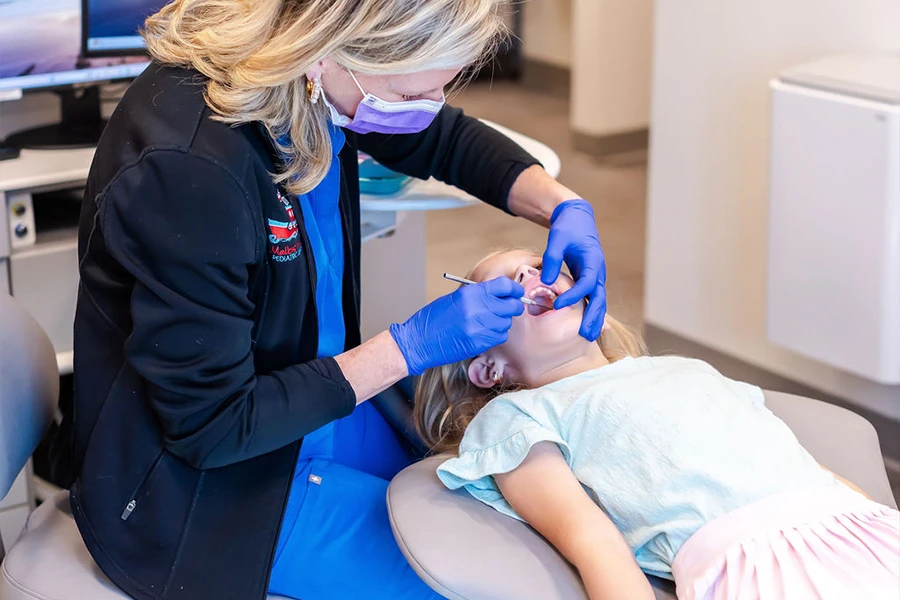
A professional fluoride treatment is a concentrated gel, foam, or varnish applied directly to your child’s teeth at the end of a cleaning to strengthen enamel and help prevent cavities. It takes about a minute, and most children barely register that it happened. Our fluoride treatment page walks through the visit step by step.
Fluoride is a naturally occurring mineral. When it contacts enamel, it bonds into the tooth surface and makes it harder for the acids produced by bacteria to dissolve minerals out of the tooth. That is the whole mechanism, and it is why fluoride is described as both protective and, in the earliest stages of decay, restorative.
What makes the in-office version different is concentration and contact. Toothpaste and tap water deliver low levels of fluoride many times a day; a varnish delivers a much higher level that sits against the enamel and keeps releasing fluoride for hours afterward.
Is Fluoride Safe for Children? What the Concerns Actually Are
Yes, at the doses used in dentistry. The concerns parents read about almost always involve swallowing fluoride over long periods, not a varnish applied to the tooth surface for a few minutes.
Dental fluorosis
Fluorosis is the condition parents ask about most. It shows up as faint white specks or streaks on the enamel and comes from ingesting too much fluoride while teeth are still forming under the gums. It is cosmetic, not painful, and mild cases are often only visible to a dentist. Professional varnish is applied to the tooth, and the amount used is small, which is why it is not the usual source.
Swallowing toothpaste
The realistic risk at home is a child who eats toothpaste. Use a smear the size of a grain of rice for children under three and a pea-sized amount for ages three and up, supervise brushing, and teach spitting instead of rinsing and swallowing.
After-treatment tenderness
Some children report a slightly odd taste or mild gum tenderness after a varnish. It passes quickly. Tell us about any allergies or sensitivities beforehand so we can choose the right product.
The other honest answer is that fluoride is a choice you get to make. If you have questions or hesitations, raise them at the appointment. Our doctors would much rather talk through your concerns than have you sit quietly through a treatment you are unsure about.
What Types of Fluoride Do Pediatric Dentists Use?
Several forms exist, and they do different jobs. Knowing which one your child received helps the aftercare instructions make sense.
Silver diamine fluoride deserves a note of its own, because it is a different tool with a different purpose. We offer SDF at our practice to arrest active decay on a specific tooth, and it is minimally invasive with no drilling. It does darken the treated area of decay, which is a tradeoff we will always discuss with you first. Standard varnish, by contrast, goes on all the teeth as prevention during a preventative dentistry visit.
How Fluoride Protects Your Child’s Teeth
Fluoride does more than one thing, and the benefits build with repetition over the years when your child is at highest risk for cavities.
- Strengthens enamel. Fluoride bonds into the outer layer of the tooth so it resists acid from food, drinks, and bacteria.
- Reverses the earliest decay. At the white-spot stage, before a true cavity has formed, fluoride can remineralize enamel and stop the process before a filling is needed.
- Protects baby teeth and permanent teeth. Healthy primary teeth hold space for the adult teeth coming in behind them, so protecting them protects future alignment.
- Fits any age. Varnish can be used on very young children, including toddlers with only a few teeth.
- Costs less than treatment. Preventing a cavity is almost always simpler, faster, and less expensive than restoring one, and most plans cover fluoride as a preventive benefit.
Fluoride also pairs naturally with sealants, which shield the deep grooves on back molars where brushing struggles to reach. The two work on different surfaces: varnish strengthens the whole tooth, while dental sealants physically cover the chewing surface. Many of our patients get both at the same visit.
How Often Should Kids Get Fluoride Treatments?
For most children, fluoride is applied at each routine dental visit, which typically means every six months alongside a cleaning and exam. Children at higher cavity risk may be scheduled more often.
What raises a child’s cavity risk
- A history of cavities in your child, or in siblings and parents
- Frequent snacking, juice, sports drinks, or sweetened milk throughout the day
- Braces, deep grooves, or crowded teeth that are difficult to brush
- Dry mouth, certain medications, or medical conditions
- Difficulty with daily brushing due to sensory or motor challenges
When fluoride treatments usually begin
Varnish can start as soon as the first teeth appear. That is also the age range when we like to see children for a first visit, because early habits are easier to build than to repair.
What to do after the appointment
Follow the instructions we give you that day, since they vary by product. With varnish, we typically ask families to wait before brushing and to stick to soft, cool foods for a few hours so the fluoride stays in contact with the enamel. Our post on how often kids need dental cleanings covers how fluoride fits into the broader six-month rhythm.
Ask Our Spanish Fort Pediatric Dentists About Fluoride for Your Child — We Are Glad to Explain
Every child’s cavity risk is different, and so is every family’s comfort level with fluoride. Dr. Kelly Jones, Dr. Kristin Correa, and Dr. Elizabeth Clay are board-certified pediatric dentists who will look at your child’s teeth, explain what they see, and give you a straight recommendation you can ask questions about.
We serve families from Spanish Fort, Daphne, Bay Minette, Fairhope, Monroeville, and the surrounding Gulf Coast communities. Call or text (251) 626-9924, or request an appointment and our team will follow up to get your child scheduled.
Frequently Asked Questions About Fluoride for Kids
At what age can a child start fluoride treatments?
Fluoride varnish can be applied as soon as your child has teeth, and it is commonly used for toddlers. The form we choose depends on age and cooperation: varnish for the youngest patients, gel or foam trays for older children who can hold a tray comfortably.
Does fluoride varnish hurt or taste bad?
It does not hurt. A small brush applies the varnish in under a minute, and it sets on contact with saliva. Children sometimes notice a temporary film on the teeth or a flavor they find odd, both of which fade the same day.
Is fluoride still necessary if our water is fluoridated?
Usually yes. Fluoridated water provides low-level protection all day, while a professional treatment delivers a much higher concentration that stays on the enamel for hours. They complement each other rather than replace each other. If your home uses well water or a filtration system that removes fluoride, tell us so we can factor that in.
What is the difference between fluoride varnish and silver diamine fluoride?
Varnish is preventive and goes on all the teeth during routine visits. Silver diamine fluoride is used on a specific tooth to stop decay that has already started, without drilling. SDF darkens the decayed area it treats, so we always discuss it with you before using it.
Can my child skip fluoride and still avoid cavities?
Some children do, especially with careful brushing, flossing, low-sugar snacking, and regular visits. It is your decision, and we will respect it. If you decline fluoride, we will focus more heavily on home-care coaching, diet, sealants, and closer monitoring at oral health exams so nothing small becomes something big.