Are Pediatric Dental Exams Painful? The Short Answer
Are pediatric dental exams painful for children? No, routine pediatric dental exams are not painful. A standard visit involves a gentle visual inspection, counting of teeth, and a soft professional cleaning. Most children feel mild pressure at most, never sharp pain. Pediatric dentists use child-friendly tools and techniques designed for small mouths and growing smiles.
At Malbis Parkway Pediatric Dentistry in Spanish Fort, AL, our board-certified pediatric dentists focus on making every visit calm and comfortable. The bigger hurdle for many young patients isn’t pain. It’s the unfamiliar sounds, sights, and feelings of a new environment.
That’s why our doctors and staff take time to explain each step in language children understand. We show the tools, count slowly, and let children ask questions. When children feel in control, anxiety drops quickly. And when anxiety drops, the exam becomes what it should be: a quick, gentle, positive dental experience.
What Happens During a Pediatric Dental Exam
A pediatric dental exam follows a predictable, gentle routine designed for young patients. The visit begins with a warm greeting, a quick tour, and a chance for your child to meet the doctors and staff. From there, each step is explained in kid-friendly terms before it begins.
Here’s what you can expect during a typical visit:
- Welcome and tour. Your child gets to see the chair, the light, and the tools before anything happens. This builds comfort and trust.
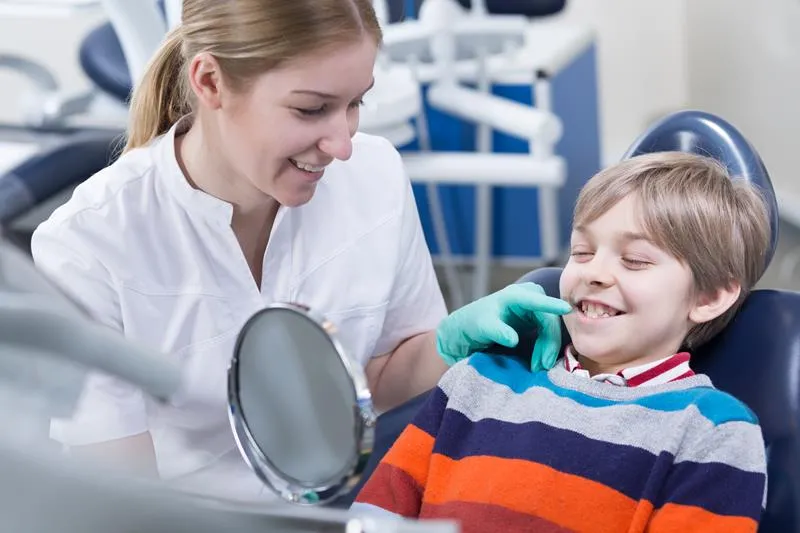
- Visual and tactile check. The dentist looks at teeth, gums, tongue, and bite using a small mirror and explorer. There’s no drilling or sharp work during a routine oral health exam.
- Professional cleaning. A soft polishing brush removes plaque and surface stains, and most children say it tickles more than anything else.
- X-rays only when needed. Digital images are taken only if your child’s age, tooth development, or risk factors call for them.
- Fluoride application. A flavored varnish is painted on the teeth to strengthen enamel. It’s quick and tastes mild.
- Parent conversation. We talk through brushing tips, diet, growth, and any concerns you’ve noticed at home.
The whole appointment usually moves quickly. Children often leave with a sticker, a new toothbrush, and a smile.
Benefits of Regular Pain-Free Dental Exams
Regular exams do far more than check for cavities. They build the foundation for a lifetime of healthy smiles by catching small problems before they grow. For families across the Gulf Coast, consistent visits keep oral health on track year after year.
Why do early dental visits matter so much?
Consistent visits give your child real, measurable advantages over time:
- Early detection. Cavities, bite issues, and gum concerns can be spotted long before they cause discomfort.
- Positive associations. When visits feel easy and friendly, children grow up viewing the dentist as a helpful partner, not a source of fear.
- Fewer emergencies. Routine monitoring reduces the chance of late-night calls and unexpected pain.
- Cleaner, stronger teeth. Professional cleanings remove buildup that brushing alone can’t reach, lowering decay risk.
- A dental home. Your child sees the same trusted doctors and staff over time, which makes every visit easier than the last.
How does an early start protect long-term oral health?
According to the American Academy of Pediatric Dentistry (AAPD), establishing a dental home by age one helps prevent dental disease and supports healthy development. That early start pays off for years, helping your child keep strong teeth and a confident smile while giving you confidence that their oral health is in good hands. Many families who visit Malbis Parkway Pediatric Dentistry find that these early habits make later visits far simpler and less stressful for everyone involved.
Exams vs. Treatments: When Discomfort May Occur
It helps to separate routine exams from dental treatments. The two feel very different, and most children will only need the former.
| Visit Type | What’s Involved | Comfort Level |
|---|---|---|
| Routine Exam | Visual check, cleaning, fluoride | Gentle, no pain |
| Digital X-rays | Quick image capture | No discomfort |
| Filling | Numbing gel, soft anesthetic, tooth-colored fill | Mild pressure, minimal discomfort |
| Extraction | Local anesthetic, gentle removal | Numbed area, brief pressure |
| Silver Diamine Fluoride | Brush-on liquid to arrest decay | No discomfort |
| Procedures with Nitrous Oxide (Laughing Gas) | Relaxation support during treatment | Calm, comfortable |
Routine oral health exams are gentle and non-invasive. If a treatment is needed, our doctors use numbing techniques so your child feels pressure rather than pain. For anxious children or young patients with special needs, nitrous oxide (laughing gas) helps them relax through the appointment.
Silver Diamine Fluoride is a non-invasive option we sometimes recommend for early decay. It’s brushed on, takes seconds, and stops cavities from growing without any drilling.
What Affects a Child’s Comfort During Exams
Several factors shape how your child experiences a dental visit. Understanding them helps you set the stage for success.
The most common influences include:
- Age and developmental stage. Toddlers often need shorter visits, while older children can sit through longer appointments.
- Past dental experiences. A child with a positive history tends to feel relaxed. A child with a difficult past visit may need extra reassurance.
- Dental anxiety or sensory sensitivity. Some children are more sensitive to sounds, lights, or new textures. Pediatric practices are built with this in mind.
- Provider training. Board-certified pediatric dentists complete years of specialty training in child behavior, growth, and gentle techniques.
- Scope of the visit. A simple oral health exam feels different from a filling, even when both are well-managed.
- Parent preparation. Reading a fun book about the dentist or practicing “open wide” at home can make a real difference.
Our nautical-themed waiting area helps put children at ease the moment they walk in, and families across the Gulf Coast often mention how much their children enjoy it. Small touches like this matter more than parents often realize.
Which Children May Need Extra Support
Every child is different, and some young patients benefit from additional comfort planning. Knowing this ahead of time helps your visit go smoothly.
Children who may need extra support include:
- Children with high dental anxiety. Behavioral techniques like tell-show-do, distraction, and praise help build trust step by step.
- Special-needs young patients. Sensory-friendly accommodations, longer appointment slots, or nitrous oxide (laughing gas) can ease the experience. We care for infants, children, teens, and youth with special needs.
- Children with prior negative experiences. A slow, gradual reintroduction with short, easy visits can reset their view of dental care.
- First-time patients. A “happy visit” focused on familiarization rather than treatment helps brand-new patients feel safe.
- Children with strong gag reflexes or oral sensitivity. Our doctors adjust technique, positioning, and pacing as needed.
If you know your child needs extra time or specific accommodations, call ahead. Sharing this with our doctors and staff lets us prepare and make every visit a positive, comfortable experience for your child here in Spanish Fort, AL.
Frequently Asked Questions
Do dental cleanings hurt children?
No, professional cleanings are gentle and well-tolerated. We use a soft polishing brush with flavored paste to remove plaque and surface stains. Most children say it tickles or feels like a small toothbrush. There’s no sharp scraping during a routine cleaning for young patients without significant buildup.
How can I prepare my child for a dental exam?
Keep things simple and upbeat. Read a children’s book about visiting the dentist, practice opening wide in front of a mirror, and avoid words like “shot” or “hurt” beforehand. Let your child know they’ll meet friendly helpers who count teeth and make smiles strong. Positive framing sets the tone for a great visit.
What if my child cries during the visit?
That’s completely normal, especially for first-time patients or younger children. Our doctors and staff are trained to work with crying or fussy young patients using calm voices, breaks, and gentle reassurance. Most children settle within a few minutes once they realize nothing hurts. Families across the Gulf Coast tell us this gentle pacing makes a lasting difference.
At what age should the first dental exam happen?
The AAPD recommends a first visit by age one or within six months of the first tooth coming in. Early visits are short, friendly, and focused on building comfort. They also let us spot habits or concerns early, which is why so many families choose Malbis Parkway Pediatric Dentistry for their child’s first appointment.
Are X-rays painful for kids?
No, modern digital X-rays are gentle and cause no pain. They use very low radiation and take only seconds to capture. We only take X-rays when clinically needed based on your child’s age, risk, and tooth development.
How do pediatric dentists reduce anxiety?
Pediatric dentists complete additional training focused on child behavior and gentle care. Techniques like tell-show-do, positive reinforcement, distraction, child-friendly language, and nitrous oxide (laughing gas) when appropriate all help create a calm, supportive setting. Our board-certified pediatric dentists in Spanish Fort, AL bring this specialty training and a gentle touch to every appointment, giving your child the smile they deserve.