Curious about the right schedule for your child’s professional cleanings? Most children need one every six months, starting by their first birthday or when the first tooth comes in. At Malbis Parkway Pediatric Dentistry, our board-certified pediatric dentists follow guidance from the American Academy of Pediatric Dentistry (AAPD) and set each child’s schedule based on their individual needs. Families across Spanish Fort count on us for that personalized approach.
What Is a Pediatric Dental Cleaning?
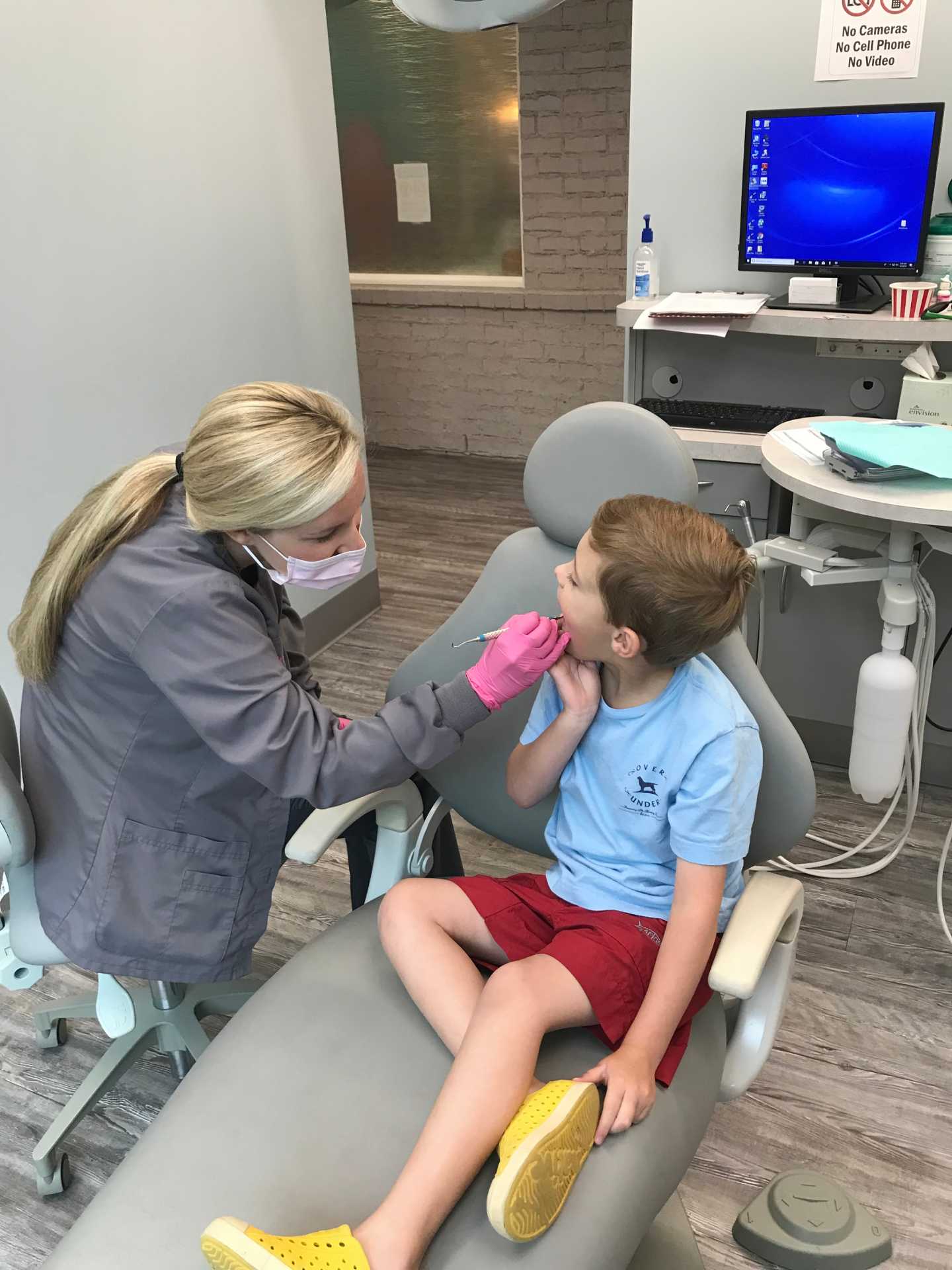
A pediatric dental cleaning is a professional, child-friendly visit where we gently remove plaque and tartar from your child’s teeth, polish the enamel, and apply fluoride to strengthen growing smiles. The appointment also includes a quick oral health exam to check for cavities, monitor tooth development, and answer parent questions.
A cleaning (also called a prophylaxis) is different from a full oral health exam, though the two often happen together. During the cleaning, our hygienists focus on removing buildup brushing at home can miss. During the exam, our doctors look more closely at tooth alignment, bite, gum health, and overall growth.
Every step is sized and paced for children. We use smaller instruments, kid-friendly flavors, and lots of encouragement so each visit feels safe and fun, never rushed or scary.
How Often Should Kids Get Dental Cleanings?
A dental cleaning every six months suits most children well. The AAPD and American Dental Association (ADA) both recommend twice-yearly visits for routine prevention, starting with the first dental visit by age 1 or within six months of the first tooth eruption . Higher-risk children may need cleanings every three to four months.
That six-month rhythm works well for most young patients across Spanish Fort, but it isn’t one-size-fits-all. Some children benefit from more frequent care based on their personal risk factors.
Common factors that may shift the recommended schedule:
- A history of cavities or early childhood caries
- A diet high in sugar, juice, or frequent snacking
- Special healthcare needs that affect oral hygiene
- Orthodontic appliances or braces
- Enamel weakness or developmental concerns
- Family history of dental issues
After your child’s first visit, our doctors set a recall interval that fits your child. We look at cavity risk, hygiene habits at home, diet, and how comfortably your child handles each appointment. If your child is doing great, six months works perfectly. If we spot warning signs, we may recommend a shorter recall to keep small problems from becoming big ones.
The goal is simple: catch concerns early, build positive habits, and protect those happy, healthy smiles.
Benefits of Regular Cleanings for Children
Routine professional cleanings do far more than freshen breath. They lay the groundwork for a lifetime of healthy smiles by stopping problems before they start.
Why Do Cleanings Catch Cavities Early?
Regular visits give our doctors a chance to spot tiny areas of decay long before they cause pain, often when they’re still reversible with fluoride. Professional tools also reach surfaces toothbrushes simply can’t, especially along the gumline and between back molars, so even the best home brushers benefit from a thorough cleaning twice a year.
- Early cavity detection. We catch small spots of decay while they’re easiest to treat.
- Plaque and tartar removal. Hardened buildup gets cleared away before it harms the gums.
- Positive dental experiences. Friendly, frequent visits help children feel calm and confident in the dental chair, reducing fear over the long term.
How Do Cleanings Support Healthy Growth?
Beyond preventing decay, every visit lets our doctors keep an eye on how your child’s smile is developing. Tracking erupting teeth and jaw growth helps us flag orthodontic concerns at the earliest stage, and protecting baby teeth keeps the foundation strong for the permanent teeth on the way.
- Growth and bite monitoring. Our doctors track erupting teeth, jaw development, and spacing so we can flag orthodontic concerns early.
- Keeping baby teeth healthy matters because primary teeth hold space for permanent teeth and guide them into place, supporting the smile your child will have as an adult.
Regular care also gives parents peace of mind. You’ll always know where your child stands, what to watch for at home, and how to help them succeed.
Baby Teeth vs. Permanent Teeth: Do Cleaning Needs Differ?
Baby teeth and permanent teeth both need professional cleanings every six months, but the focus of each visit shifts as your child grows. Baby teeth still need full dental care even though they’ll fall out, because they guide adult teeth into position and help with speech, chewing, and confidence.
The mixed dentition years, roughly ages 6 to 12, deserve special attention. With baby teeth and permanent teeth side by side, brushing gets tricky and decay risk can climb.
No matter the stage, our doctors and staff adjust each visit to fit your child’s developmental needs.
What Affects the Cost and Frequency of Cleanings?
Your child’s cavity risk, age, dental insurance coverage, and any added preventive treatments are the biggest factors in both how often they need a cleaning and what you may pay out of pocket. Most dental plans cover two preventive cleanings per year for children, though coverage details vary by carrier and policy.
Other factors that can affect cost include:
- Added preventive services like fluoride varnish, sealants, or x-rays
- Children at greater cavity risk often need higher-frequency recalls, which can add to yearly costs
- Specialized care for young patients with special healthcare needs
- When a child needs extra help relaxing, behavior management options such as nitrous oxide (laughing gas) may be part of the visit
We always recommend checking your benefits before your visit so there are no surprises. Our doctors and staff are happy to walk you through what’s recommended for your child and help you understand what to expect.
Which Children Need Cleanings More Often?
While every six months works for most kids, some children benefit from cleanings every three to four months. More frequent visits help us stay ahead of decay and protect your child’s smile during higher-risk seasons of life.
Children who may need more frequent cleanings include:
- Those with a history of cavities or early childhood caries
- Children with high-sugar diets or frequent snacking patterns
- Young patients with special healthcare needs that make daily brushing harder
- Kids in braces or with orthodontic appliances that trap plaque
- Babies and toddlers with bedtime bottle or extended nursing habits that raise decay risk
- Children with weak enamel or developmental dental concerns
If your child falls into one of these groups, don’t worry. More frequent visits are a positive thing. They give us more chances to catch small issues, reinforce good habits, and help your child feel comfortable with their doctors and staff.
Frequently Asked Questions
When should my child’s first dental visit be?
The AAPD recommends a first dental visit by age 1 or within six months of the first tooth coming in. Early visits help your child grow up feeling at home in the dental chair and let our doctors catch any concerns at the earliest possible stage. You can request an appointment whenever you’re ready to get started.
What happens during a child’s cleaning appointment?
A typical visit includes a gentle professional cleaning, polishing, fluoride application, and an oral health exam. Our doctors and staff walk your child through each step using kid-friendly language, and parents are welcome to be part of the visit. Most appointments take about 30 to 45 minutes .
Is twice a year really necessary for kids?
Yes, for most children. Cleanings every six months let us remove buildup that home brushing can’t reach and spot early signs of cavities while they’re still easy to treat. Some higher-risk children benefit from cleanings every three to four months, which our doctors will recommend if needed.
What if my child has a toothache between visits?
Call us right away. Tooth pain shouldn’t wait until the next scheduled cleaning. Our doctors are on-call for pediatric dental emergencies, and we’ll get your child seen as soon as possible to relieve discomfort and address the cause.
Are thumb sucking and pacifiers harmful to teeth?
Thumb sucking and pacifier use are normal in infancy and rarely cause lasting harm if the habit stops by age 3. Prolonged habits can affect bite and jaw development, so we’ll keep an eye on it at every visit and offer gentle guidance if needed. Our board-certified pediatric dentists care for infants, children, teens, and youth with special needs in a nautical-themed waiting area built to make every visit feel welcoming, and we’d love to help give your child the smile they deserve.